
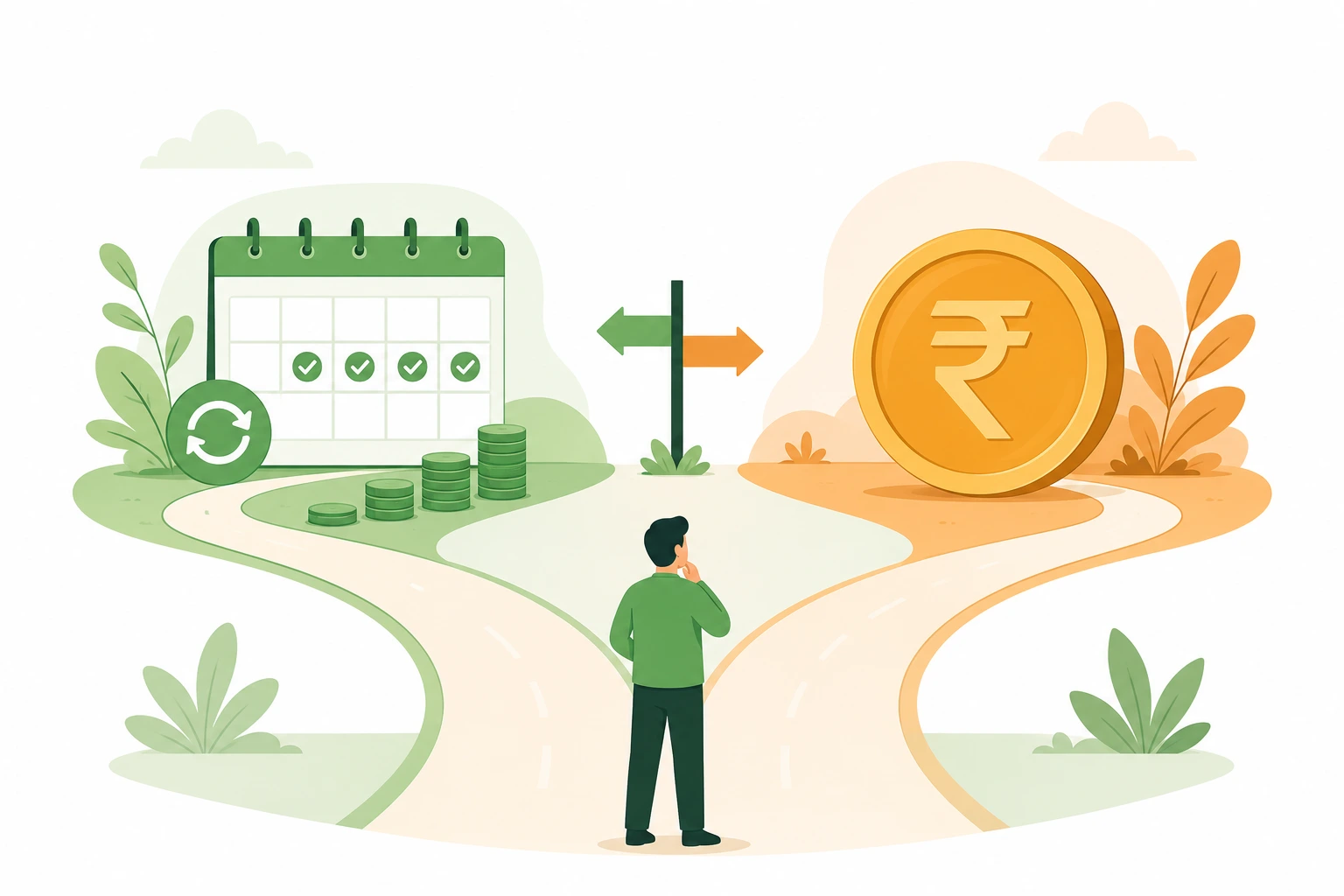
What is EMI?
EMI (Equated Monthly Instalment) is a fixed payment made every month over a set period to repay a loan. It includes both principal repayment and interest. EMIs make large purchases affordable by spreading the cost over time.
What is Lump Sum Payment?
A lump sum payment means paying the full amount upfront at once, without any financing or borrowing.
EMI vs Lump Sum — Key Comparison
| Factor | EMI | Lump Sum | |--------|-----|----------| | Upfront cost | Low | High | | Total cost | Higher (includes interest) | Lower (no interest) | | Cash flow impact | Spreads over months/years | Immediate impact | | Opportunity cost | Low | High | | Flexibility | Fixed commitment | No commitment | | Credit score impact | Positive if paid on time | No impact |
When EMI Makes Sense
1. Large Purchases You Cannot Afford Upfront
Home loans, car loans, and expensive electronics are the classic EMI use cases. Spreading Rs 50 lakh over 20 years makes a home purchase possible for most families.
2. When Interest Rate is Low
If the EMI interest rate is lower than your investment returns, it makes financial sense to borrow. For example, if a home loan is at 8% but your investments return 12%, it is better to invest the lump sum and pay EMI.
3. Preserving Emergency Funds
Paying a lump sum may wipe out your savings. Keeping cash reserves for emergencies is important — EMI helps preserve liquidity.
4. Business Purchases
Businesses often use EMI for equipment and technology to preserve working capital for operations.
When Lump Sum Makes Sense
1. When You Have the Cash
If you can afford to pay in full without straining your finances, lump sum saves you all the interest cost.
2. High Interest Rate Loans
Personal loans and credit card EMIs often charge 15% to 24% per year. At these rates, paying in full saves a significant amount.
3. Negotiating Better Deals
Cash buyers often get better deals. A lump sum payment may get you a 5% to 10% discount on property or vehicles.
4. Peace of Mind
No monthly obligation, no risk of default, no impact on monthly cash flow.
Real Example — Car Purchase
Car price: Rs 8,00,000
EMI Option: 7-year loan at 9% interest
- Monthly EMI: Rs 12,847
- Total paid: Rs 10,79,148
- Total interest: Rs 2,79,148
Lump Sum: Pay Rs 8,00,000 upfront
- Total paid: Rs 8,00,000
- Saving: Rs 2,79,148
Calculate Your EMI Free
Use our free EMI Calculator to calculate the exact EMI for any loan amount, interest rate, and tenure. Compare different scenarios to make an informed decision.
Conclusion
The right choice depends on your financial situation, interest rate, and investment opportunities. EMI makes large purchases accessible. Lump sum saves money in the long run. Use our free EMI Calculator to compare the total cost before deciding.